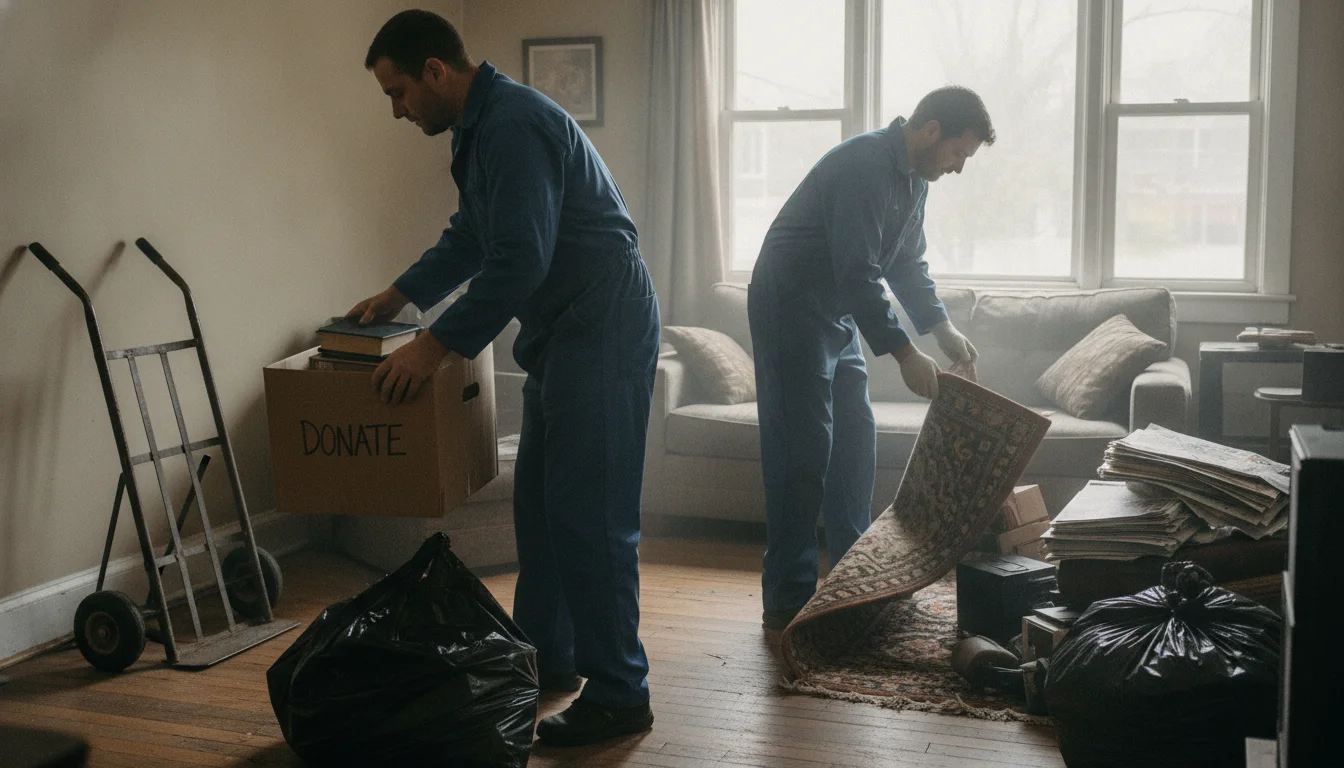
Your home is full, the clock is ticking, and you want a clear plan. Many people in Springhill search for junk removal near me and still feel unsure. A house cleanout is the complete removal of unwanted items from a home by a trained crew that sorts, loads, and hauls for donation, recycling, or disposal. This house cleanout FAQs guide explains pricing factors, timelines, what stays, and what goes so you know what to expect with Junk Removal Springhill.
Key takeaways:
- A house cleanout removes unwanted items from inside and outside the home, with sorting for donation, recycling, or disposal.
- Quotes reflect volume in the truck, labor, access, and disposal needs; heavy or special items may require extra handling.
- Full-service cleanouts are hands-off compared with dumpster rental and are often faster when time is limited.
- Most projects are scheduled quickly; duration depends on home size, crew size, access, and sorting needs.
- Crews take most household items but cannot haul hazardous materials restricted by Springhill rules.
What Is a House Cleanout?
A house cleanout is a start-to-finish service for clearing unwanted items from living areas, garages, attics, sheds, and yards. A professional crew handles the lifting, sorting, hauling, and end-of-job sweep so you can focus on decisions while they manage donation, recycling, and disposal routes.
Costs and Pricing for a House Cleanout
What Affects Your Quote
Cleanout quotes typically reflect four variables: how much space your items take in the truck, the labor needed to move them, ease of access, and the type of disposal required. Stairs, tight halls, or long carries can add time. Heavy or specialty pieces, such as pianos, safes, or fitness equipment, may call for extra labor or tools.
Real-World Examples
Every home is different, so costs vary. A light studio with a couple of bulky pieces isn’t the same as a two-story home with an attic, basement, and shed. For example, one sofa plus a few boxes may fit in part of a truck, while a full-home clear-out with furniture, closets, and outdoor items can require several loads and a full day. Your quote reflects total volume and the work time needed.
Full-Service vs. Dumpster Rental
Comparing full-service cleanouts with dumpster rentals helps clarify your options. With a rental, you do the loading, may need a permit depending on placement, and must protect your driveway. A full-service crew does the lifting, sorting, and hauling, then sweeps up before leaving. It’s hands-off for you and is often faster when you’re on a deadline or short on help.
Ways to Reduce Your Bill
You can help keep the final bill down by grouping items, breaking down small furniture, and having everything ready near access points. Clear labels for “keep,” “donate,” and “discard” save time. Sharing photos or a short video beforehand helps your crew give a tighter estimate and plan truck space.
Scheduling and Timeline: How Long Does It Take?
How Scheduling Works
Most cleanouts start with a brief conversation and photos or an on-site walkthrough. Same-day or next-day pickups are often possible in busy seasons, and planned projects can be set to match a move-out or listing date. Junk Removal Springhill aims to keep timing clear and flexible from the first contact to final sweep.
Crew Size and Duration
Crew size depends on your goals and the property. A small apartment may take a few hours with a two-person team. Larger homes with attics and basements can run most of a day with a bigger crew. Tight access, heavy items, and detailed sorting add time, so share those details early.
On Cleanout Day
Your team arrives within a set window, walks the space with you, and confirms the plan. Floors and doorways are protected when needed. The crew works room by room at a steady pace and checks in if questions arise. When the truck is loaded, they secure the items and head out to donate, recycle, or dispose as planned.
Final Walkthrough
After the last items are loaded, there’s a final walkthrough. The team sweeps floors and leaves paths clear. You confirm that each space is finished and that “keep” items stayed put.
What Stays, What Goes, and What We Can't Take
Items We Take
Most household items qualify: sofas, tables, mattresses, dressers, TVs, computers, appliances, rugs, clothing, toys, and mixed boxes from closets, garages, or attics. Bagged yard debris, cut branches, and manageable fencing sections are common, too.
Items We Can't Take
Some materials are restricted by local regulations. Hazardous items—such as wet paint, solvents, oils, fuels, asbestos, and medical waste—require special handling. Propane tanks, certain batteries, and chemicals may need drop-off at an approved facility in or near Springhill. Your crew can point you to safe, compliant options when an item can’t be hauled.
Donation and Recycling
Usable items can be donated, and many materials—like metal, cardboard, and some electronics—can be recycled. Crews often sort as they load to minimize landfill trips. If you want donation receipts when possible, mention it during the walkthrough so routes can be planned accordingly.
Keep and Sensitive Items
Set aside documents, photos, jewelry, and keepsakes before work begins. Use a lidded bin with a clear “Do Not Remove” note. If you’re unsure about an item, ask the team to pause so you can decide. For sensitive papers, plan to shred or store them in a locked container that stays with you.
How to Prepare Your Home for a Smooth Cleanout
Create Clear Zones
Create three simple zones: a keep area, a donate pile, and a discard section. Mark them with tape and notes so everyone knows what belongs where. This prevents mix-ups and keeps the pace steady.
Make Access Easy
Clear walkways to doors, stairs, and the driveway. If possible, reserve a parking space close to the entrance. Share elevator info, gate codes, pet details, or quiet hours to make arrival and access easy.
Share Details Early
Provide photos or a short video before the visit for a tighter estimate. Flag heavy or tricky items—like a treadmill in the basement or a china cabinet upstairs. If the home is vacant, explain how the team will get keys or meet your agent.
After the Job
Keep any donation receipt for your records. Ask for before-and-after photos if you need to show progress to a landlord, agent, or family. Plan next steps, such as Residential Junk Removal for lingering items, a quick deep clean, or scheduling an Attic & Basement Cleanout if you saved that space for another day.
Local Service You Can Trust
These house cleanout FAQs are a starting point, and a smooth project is easier with a local team that knows Springhill sites and rules for disposal and donation. Junk Removal Springhill works across Springhill every week and can help with House Cleanout, Estate Cleanout, Office Cleanout, and even Commercial Junk Removal when you change spaces. If you’re planning a business move, our office cleanout FAQs and retail removal FAQs offer similar guidance for commercial cleanouts. Ready to make a plan with a friendly crew that does the heavy lifting while you direct the flow? Contact us.