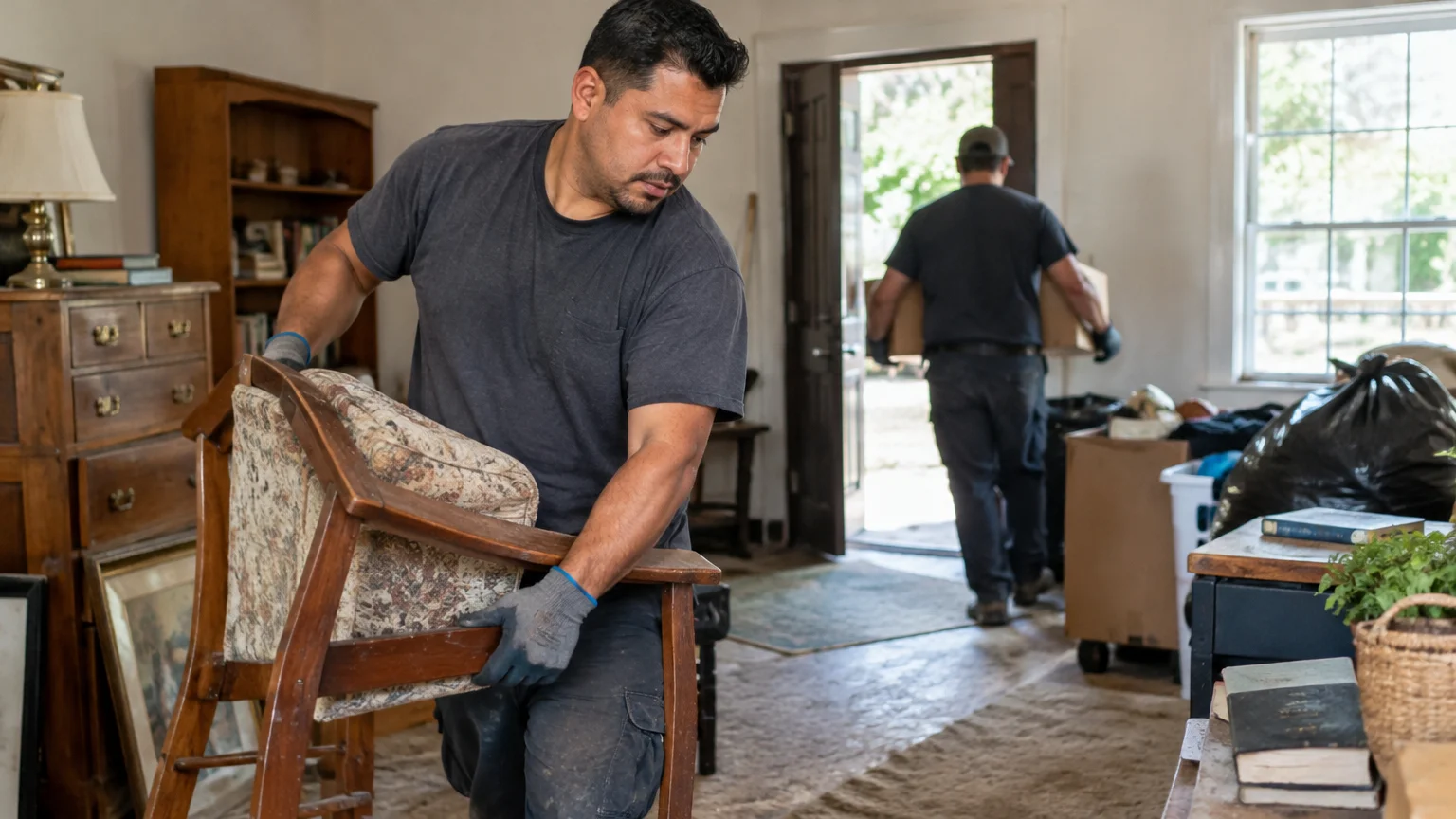
Estate cleanout FAQs help you see when a full home cleanout is needed, what shapes the cost, how long the job may take, and what happens to donations and valuables. Knowing these estate cleanout FAQs makes it easier to plan the work and choose the right help in Springhill.
Estate cleanout FAQs usually center on four things: when a full house cleanout is needed, what affects the cost, how long the work takes, and what happens to donations and valuables. An estate cleanout is a full home clear-out after a major life event, handled by a junk removal or property cleanout team. Here is what to know about estate cleanout FAQs.
What is an estate cleanout and when do people usually need one?
An estate cleanout is a full removal of items from a home, garage, attic, and basement so the property can be sold, rented, or turned over. People usually need one after a loss, a move to assisted living, a foreclosure, or when they inherit a home that is packed with belongings.
In many cases, family members live outside Springhill, in a different city or state. They may not have the time, help, or tools to sort and haul everything. A local estate cleanout service steps in to empty rooms, move heavy furniture, remove old appliances, and clear debris so the property is safe and ready for what comes next.
An estate cleanout often includes sorting items into trash, recycling, donations, and possible keepsakes. Crews may help move items to a storage unit or set aside boxes for the family to review later. Some homes are in good shape and only need clutter gone. Others have years of stored items, broken furniture, and large junk that needs careful handling.
A cleanout can be needed at many points in the probate process. Some families call right after they receive responsibility for the home. Others wait until legal work is almost done. There is no single right time, but starting with a simple plan and schedule helps lower stress.
Common situations that call for an estate cleanout
Several life events tend to lead to a full home cleanout:
- Passing of a loved one and the family needs to clear the house.
- Move to assisted living or long-term care where the old home will be sold.
- Foreclosure or eviction where the property must be empty for the bank.
- Hoarding situations where rooms are packed and unsafe to sort alone.
- Inherited home in another area that the new owner will not occupy.
In each case, the goal is similar. The property needs to be emptied in a respectful, safe, and timely way so the next chapter for the home can begin.
Who is responsible for arranging the cleanout?
The person in charge depends on the legal status of the estate. Often it is the executor, personal representative, or trustee named in the will or by the court. In a foreclosure, it is usually the lender or their property manager. For hoarding or senior moves, a close family member may take the lead.
That person does not have to do the physical work. They only need to choose a service and give clear rules about what should be kept, donated, or removed. Junk Removal Springhill can help families organize these steps so nothing important is taken by mistake.
How much does an estate cleanout usually cost and what affects the price?
An estate cleanout cost depends on how much there is to remove, how easy it is to reach, and how complex the job is. A small, well-kept condo with light clutter usually costs less than a large house filled with heavy junk, old furniture, and broken appliances on every floor.
Estate jobs are often more involved than a simple junk pickup. Crews may need extra time for sorting, walking items up or down stairs, and handling items with care. The total will be confirmed on a quote after the team sees the home or reviews clear photos. That way there are no surprises about how big the project really is.
Key factors that change the total cost of an estate cleanout
Several details can change how much an estate cleanout service ends up costing:
- Volume of items: More rooms and more junk means more labor and truck space.
- Type of items: Heavy furniture, appliances, mattresses, and scrap wood are harder to move than bags of clothes.
- Access to the home: Stairs, long driveways, tight hallways, and limited parking can slow the crew down.
- Special handling: Hazardous waste such as paint, chemicals, or old fuel must follow local rules and may need a separate service.
- Sorting and saving: If the crew must carefully search for documents, photos, or jewelry, that extra care adds time.
Compared with a quick garage cleanout, an estate clear-out tends to be one of the larger and more detailed projects for a junk removal company. It often sits between a simple truckload of junk and a full property cleanup with repairs.
How estate cleanout pricing compares to standard junk removal
Standard junk removal might be a single load of old furniture, a broken refrigerator, or a curbside pile after a DIY cleanout. The team arrives, loads, and hauls away. Estate cleanouts are more like whole house cleanout services. Crews often make several passes room by room.
This means an estate cleanout usually takes longer and often costs more than a basic junk pickup. But it can still be more efficient and less stressful than hiring movers, renting a dumpster, and doing it alone. When people search for a house cleanout service near them, they are often looking for this kind of all-in-one help.
The final cost depends on the actual work needed. The best way to know is to have the home reviewed and get a clear written quote before any items are removed.
How long does an estate cleanout take and how should we prepare?
The time needed for an estate cleanout depends on the size of the home, how full it is, and how fast decisions can be made about what stays and what goes. A small, tidy home might be cleared in a day. A large, packed property can take several days or more.
The schedule also depends on how soon the cleanout team can visit. Busy seasons, like spring and early summer, may book up fast. In many cases, junk removal teams can still respond quickly for urgent needs, such as a looming sale date or a foreclosure deadline.
Typical timelines from first call to a cleared property
In a simple estate cleanout, the steps might look like this:
- Initial call or online request: The responsible person explains the situation, property size, and timing goals.
- Walkthrough or photo review: The team visits the home or reviews detailed pictures.
- Quote and schedule: The company offers a quote and books the work dates.
- Cleanout days: Crews remove items, sort donations, and clear rooms.
- Final walk-through: The responsible person checks each space and confirms the work.
Many estate cleanouts fit into a window of a few days to a couple of weeks from first contact to a cleared home. Very full or unsafe homes, such as hoarding cleanups, may need more time and may be done in stages for safety.
Steps to get ready before the cleanout crew arrives
Some prep work can make things faster and easier:
- Decide on must-keep items: Make a list of items that must stay, such as photos, key documents, or family heirlooms.
- Tag or move keepsakes: Use tape or labels to mark items to keep, or remove them from the house ahead of time.
- Gather keys and codes: Make sure the crew has access to all areas, including sheds, garages, attics, and basements.
- Unplug appliances safely: A licensed pro should disconnect gas lines from stoves or dryers when needed.
- Plan for pets or tenants: Arrange where people and animals will stay during the cleanout.
Families do not need to bag everything or move heavy furniture. That is what the cleanout team is for. Simple planning and clear labels go a long way to prevent mistakes and reduce stress.
What happens to donations, valuables, and the property after the cleanout?
Many families worry about what will happen to gifts, keepsakes, and any hidden valuables during an estate cleanout. A good team understands this and follows clear rules. Items are sorted into donations, recyclables, trash, and possible valuables or documents to set aside.
The home itself is usually left empty, swept, and ready for the next steps. This might be an estate sale, a house cleanout sale run by a pro, basic repairs, or a real estate listing. Some junk removal companies also offer light cleanup so the home looks better for photos or walk-throughs.
How donations, keepsakes, documents, and valuables are handled
Most estate cleanout services can handle donations of usable items. This can include furniture, kitchenware, clothes, and small household goods. They may take these items to local charities, thrift stores, or community groups that accept such things in Florida. Rules can change, so teams follow local donation guidelines and hours.
Important items that might be kept or reviewed by the family include:
- Personal papers and mail like tax forms, bank records, and medical files.
- Legal and financial documents such as wills, deeds, and insurance papers.
- Family photos and keepsakes including albums, letters, and special gifts.
- Small valuables like jewelry, watches, or coin collections.
The family can give the crew a list of items to watch for, and a clear plan on where to place anything valuable they find. Some people set aside a “keep” room or locked closet that the crew does not touch. Others ask that all possible valuables and papers be boxed and left in one safe spot.
Getting rid of large items is a big part of the job. Crews can remove old furniture, mattresses, and broken items so they do not block walkways or hide hazards. They can also handle how to get rid of a fridge or other appliances that have special disposal rules. Appliances containing refrigerant are subject to the U.S. Environmental Protection Agency’s safe disposal requirements.
For old TVs, computers, and other electronics, many states encourage or require recycling through approved programs, such as those listed by the U.S. Environmental Protection Agency. A local cleanout team will know how to dispose of appliances and electronics under local rules.
Key takeaways
- Estate cleanouts handle full-home contents after loss, moves, or foreclosures.
- Cost and timing change with volume, access, and how much sorting is needed.
- Donations and valuables need clear rules so nothing important is lost.
- Safe appliance and junk disposal matters for fridges, furniture, and electronics.
- Local pros can manage complex homes so families can focus on legal and personal tasks.
Frequently Asked Questions
How do I get rid of a fridge or large appliance during an estate cleanout?
Refrigerators and large appliances may need special handling, so check the disposal requirements for each item. Many estate cleanout and junk removal services can disconnect and haul these items, then take them to an approved recycler or disposal site that follows local and federal rules.
What is the best way to dispose of old furniture from an estate?
Old furniture can often be donated if it is clean and in good shape. If it is broken, stained, or unsafe, a house cleanout service can remove it with other junk. They sort what can be reused or recycled so as little as possible ends up in the landfill.
Can one junk removal company clear my garage, attic, and basement in one trip?
Many estate cleanout and junk removal teams can clear the garage, attic, basement, and main living areas in the same project. This works like a whole house cleanout, with crews moving room by room. Very large or packed homes may need more than one day, but still one organized plan.
How is an estate cleanout different from a simple junk removal job?
A simple junk removal job often means picking up a few items, like a sofa or a pile of yard waste. An estate cleanout usually means sorting and clearing an entire home, including storage areas and mixed items. These projects require more time, planning, and careful handling.
A trusted local partner makes the whole process easier. Junk Removal Springhill supports families with kind, steady help during estate cleanouts. Contact us to talk through your timeline, walk the property, and plan a respectful, complete cleanout that fits your needs.