A professional office furniture removal service helps when desks, cubicles, tables, or chairs are too large, unsafe, or hard to move. The right crew can plan pickup, clear work areas, handle heavy furniture, and sort reusable materials. This keeps renovations, moves, and business closures on track.
Table of Contents
- Why does outdated office furniture become a problem?
- Is your office renovation creating more furniture than you can handle?
- Are desks and workstations taking up valuable space?
- Do you have more office furniture than your team can move safely?
- Has a business closure or relocation left furniture behind?
- What should you do with unwanted cubicles and conference tables?
- Is office furniture blocking access, storage, or shared areas?
- How does a professional office furniture removal service work?
- How much does professional office furniture removal cost?
- How can you prepare for an efficient office furniture pickup?
- Frequently Asked Questions
- Key takeaways
- Conclusion
Why does outdated office furniture become a problem?
Outdated office furniture becomes a problem when it fills useful space, creates safety risks, or no longer fits the team. Broken chairs, damaged desks, and unused cabinets can make a workplace harder to clean. They can also delay a move, remodel, or property handoff.
How worn or unused furniture affects workspace safety
Old furniture may have loose legs, sharp edges, broken wheels, or weak shelves. These problems can cause trips, cuts, or falling items. Damaged furniture may also block a walkway or sit too close to a door.
A business does not need professional help for every small task. Staff can move light items when the path is clear and the furniture is safe. They should not lift heavy desks, glass tables, or full cabinets without proper help.
Common warning signs include:
- Furniture with broken frames, sharp edges, or loose parts
- Desks and chairs blocking walking paths or work areas
- Filing cabinets filled with items no one needs
- Old pieces that no longer fit the office layout
- Furniture stored near doors, stairs, or shared access points
When storage becomes a costly temporary solution
Storage may seem easier than making a decision. Yet unused furniture still needs space, care, and future planning. It can fill a basement, loading area, or spare room that the business could use.
A professional office furniture removal service can help Junk Removal Springhill customers choose the next step. Some pieces may be reusable. Others may need recycling or disposal. In Springhill, local rules and available facilities can affect where materials go.
Is your office renovation creating more furniture than you can handle?
An office renovation often creates many unwanted items at once. Desks, chairs, partitions, tables, and storage units may need to leave before work starts. Planning removal early helps keep the work area clear.
Managing desks, tables, seating, and fixtures during renovations
A renovation plan should list each item that will stay, move, be donated, or leave. This keeps workers from moving the same furniture twice. It also helps the removal crew understand the job before pickup day.
Clear loose items from desks and cabinets first. Keep personal records, electronics, keys, and company property with the business. Furniture attached to walls, floors, or power may need a qualified worker to disconnect it.
Do not place unwanted furniture in hallways while waiting for removal. This can limit access and create a trip risk. Use a clear staging area that does not block doors, stairs, exits, or equipment.
Why removal planning should happen before construction begins
Plan removal before demolition or new work starts. Contractors need room to work, and large furniture can delay deliveries. It can also damage finished surfaces if it stays in the work zone.
Office furniture may contain glass, metal, wood, foam, or mixed materials. Sorting these parts can take longer than expected. A planned pickup helps the business meet its work schedule without rushing employees.
Junk Removal Springhill can help Springhill businesses decide which items should leave first. A clear plan makes furniture pickup easier for staff, contractors, and property owners.
Are desks and workstations taking up valuable space?
Desks and workstations may be ready for removal when they sit unused or crowd active areas. Extra furniture can limit movement and make a small office feel tighter. Removing surplus items can create room for useful work.
Recognizing when surplus furniture is limiting productivity
A workplace may have too many desks after remote work changes, staff cuts, or a new floor plan. Empty stations can collect dust and hold boxes. They may also make it harder to clean floors and reach outlets.
Modular workstations can be hard to manage. They often include panels, brackets, shelves, wire channels, and connecting parts. Keep these parts together if the furniture may be reused. If not, group the pieces for easier removal.
A cleanout service is planned removal of unwanted items from a property. It may cover one room, a full office, or several areas during a move. The business should decide whether it needs a small furniture pickup or a larger office cleanout.
Preparing modular desks and workstation parts for pickup
Remove files and personal items from every desk before pickup. Label anything that will stay in the building. If the business has keys, assembly guides, or special parts, keep them separate from items leaving.
Workers should not take apart furniture with wiring, glass, or heavy panels unless they know it is safe. A professional crew can review the pieces and decide what needs disassembly. This helps protect walls, floors, and nearby equipment.
The best plan matches the furniture to the available space. The main Spring Hill area includes Timber Pines, Seven Hills, Brooksville, Weeki Wachee, Hudson, Shady Hills, and nearby communities. Businesses in these areas can arrange help for office furniture and other workplace junk without leaving pieces in public areas.
Do you have more office furniture than your team can move safely?
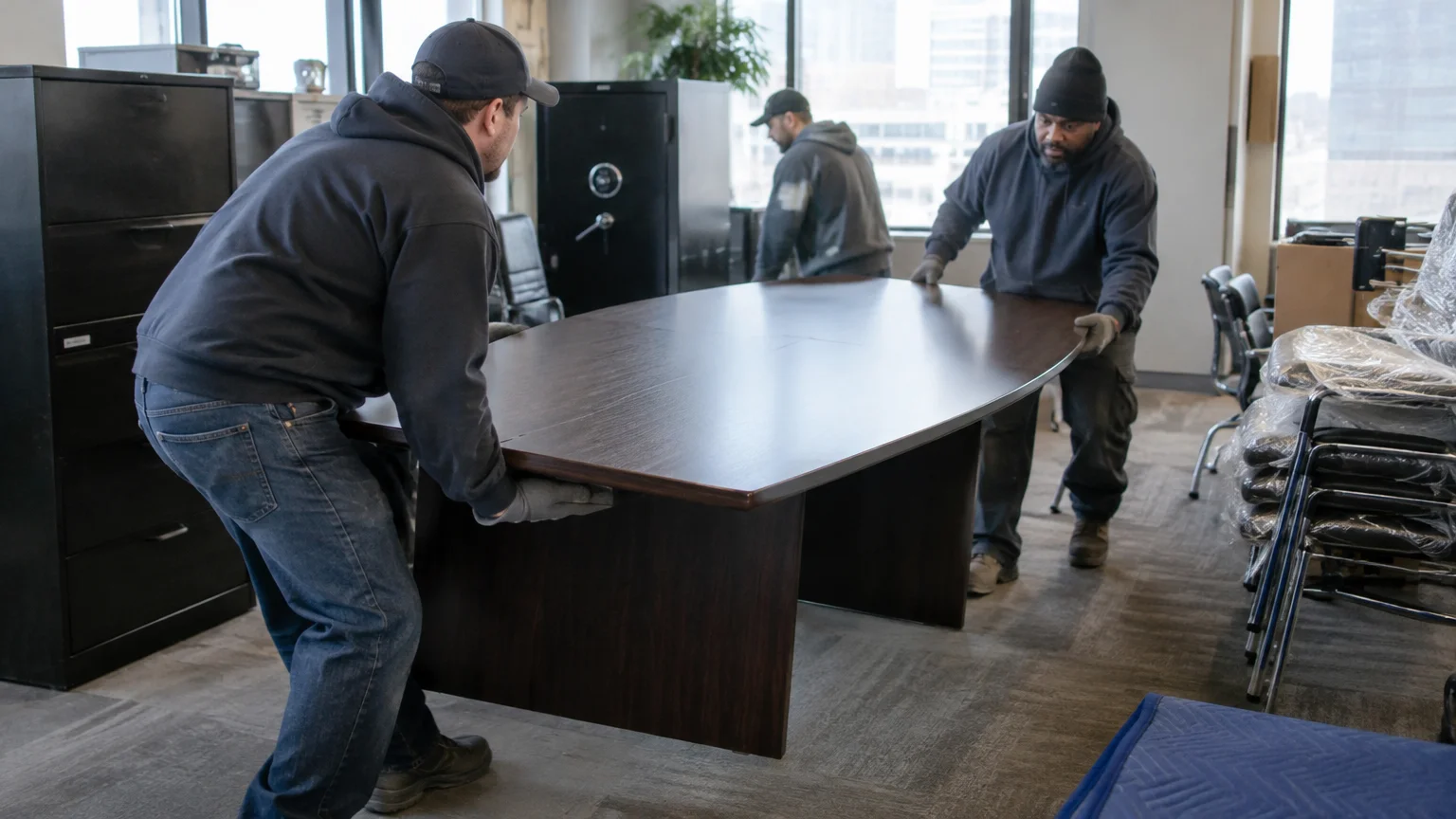
A business needs professional help when furniture is heavy, awkward, damaged, or hard to carry. A team should not risk an injury to save time. Safe removal also protects walls, floors, doors, and other property.
Common lifting and handling risks with bulky workplace items
Office furniture can be hard to balance. A desk may be wide but light, while a full cabinet may be narrow and very heavy. Glass conference tables can break in tight halls or near stairs.
Employees may also get hurt when they move furniture without enough people or proper tools. Twisting while lifting can strain the back. Carrying items down stairs can put workers and the building at risk.
A professional crew may help when furniture involves:
- Heavy desks, cabinets, safes, or conference tables
- Long pieces that cannot turn easily through doorways
- Glass, sharp metal, or unstable parts
- Upper floors, basements, stairs, or narrow halls
- Items that need careful loading near finished surfaces
Why professional crews help protect employees and property
A trained removal crew can plan the route before moving large pieces. The crew can protect door frames, floors, and nearby walls. It can also keep furniture separate from other junk during loading.
Simple upkeep remains a do-it-yourself task. Employees can empty drawers, remove labels, and gather small office items. They should leave heavy lifting, hard disassembly, and unsafe access to people equipped for the work.
For a business in Springhill, local help can reduce the time bulky furniture stays in the way. It also gives owners and managers one clear plan for a difficult removal job.
Has a business closure or relocation left furniture behind?
A closure or relocation often leaves more furniture than expected. Former offices may contain desks, chairs, shelves, cubicles, and tables with no new use. A removal plan can help meet a lease, sale, or move-out deadline.
Creating a removal plan for move-out deadlines
Start by inspecting every room. Check offices, conference rooms, break areas, storage rooms, basements, and loading spaces. List large items and mark anything that belongs to a new tenant or property owner.
Check drawers and cabinets for records. Sensitive documents need secure handling under the company’s own rules. Computers, monitors, phones, and other electronics may need a separate recycling plan.
A move-out checklist should include:
- Furniture that must leave the property
- Items that will remain for the next occupant
- Access points, elevators, stairs, and loading areas
- Building rules for pickup and removal work
- The date when the property must be empty and clean
Handling furniture left by former tenants or occupants
Property owners should confirm who owns abandoned furniture before arranging removal. A lease, written notice, or local rule may affect the next step. When ownership is clear, the owner can sort useful items from damaged pieces.
Large cleanouts often include more than furniture. A team may find appliances, boxes, shelving, carpet, and general junk. Separate plans may be needed for materials that cannot go with ordinary furniture.
Junk Removal Springhill can help property owners organize a practical office furniture removal plan. The goal is a clear space ready for its next use.
What should you do with unwanted cubicles and conference tables?
Sort unwanted cubicles and conference tables by condition, material, size, and reuse value. Reusable pieces may go to another office or donation program. Damaged materials may need recycling or disposal through an approved facility.
Separating reusable, recyclable, and disposal-bound items
A simple sorting process keeps decisions clear. First, set aside clean and usable furniture. Next, group metal, wood, cardboard, and other materials when practical. Finally, identify pieces that are broken, stained, unsafe, or too damaged to reuse.
Do not assume every item belongs in a regular dumpster. Large tables may need special handling, and mixed-material cubicles can be hard to separate. Local facilities may have their own rules for business waste.
The phrase free furniture removal can sound appealing, but businesses should check what any service includes. Item type, access, availability, and local disposal rules can affect whether a provider accepts furniture.
Why oversized furniture may require special handling
Conference tables often have wide tops, heavy bases, or glass sections. Cubicles may include connected panels and electrical channels. These features can make removal harder than moving one desk or chair.
A crew may need to disassemble parts, protect the route, and load materials in a safe order. It may also need to work around elevators, tenants, customers, or active employees. Planning matters when the office stays open during pickup.
Responsible removal means keeping reusable items separate when possible. It also means avoiding unsafe dumping or leaving large furniture beside a public road. Springhill area customers can ask about a plan that fits the property and items.
Is office furniture blocking access, storage, or shared areas?
Office furniture should be removed when it blocks halls, loading zones, exits, storage areas, or shared workspaces. Even furniture that is not broken can cause problems when it limits safe movement. Clear access matters during work and emergencies.
Clearing hallways, loading areas, and emergency access routes
Hallways and doorways should stay open whenever possible. Furniture near an exit can slow people down when they need to leave. Items in loading areas can also interfere with deliveries, maintenance, or emergency response.
Do not use stair landings or exit paths as long-term storage. A quick staging spot can become a lasting hazard when no pickup date is set. Move items to a safe, approved area instead of shifting the problem.
Businesses can remove small, light items when the route is safe. Large or unstable furniture needs a better plan. A professional crew can review the path and decide how to move pieces without harming the building.
Removing bulky items from basements, upper floors, and tight spaces
Basements and upper floors often make furniture removal harder. Stairs, low ceilings, narrow doors, and limited parking can slow the job. Elevators may have weight limits or building rules.
Clear loose objects from the route before pickup. Protect important files and tell the crew about locked doors, security steps, or access limits. Clear information helps prevent delays.
Office furniture removal companies may offer different service levels. Ask what the crew will move, whether disassembly is included, and how items will be handled afterward. A clear scope helps everyone understand the plan.
How does a professional office furniture removal service work?
A professional office furniture removal service usually starts with an assessment. The crew reviews the items, access points, timing, and removal needs. It then prepares, moves, loads, and sorts the furniture for reuse, recycling, or disposal when possible.
What happens during assessment, preparation, and pickup
During the assessment, the business explains what must leave and what must stay. The crew may review photos, rooms, stairs, elevators, parking, and loading access. It should also learn about building rules and deadlines.
Preparation starts by removing personal property, records, and unrelated items. The business can label furniture that stays. The crew can then focus on the agreed items instead of sorting through everything.
On pickup day, furniture may leave in stages. Small pieces can leave first and open a path for larger ones. Heavy or fragile pieces may need more care and more than one person.
How crews manage disassembly, loading, and responsible disposal
Some furniture can move whole. Other pieces need partial or full disassembly before they fit through doors. A crew should use a safe method that protects the building and keeps small parts together.
Loading works best when items are placed in a stable order. Reusable pieces should stay protected from damaged materials when practical. Metal, wood, cardboard, and other materials may be separated for the next step.
Professional junk removal services can also help with related items after an office move. These may include shelving, old appliances, boxes, or bulky junk. Ask about each item rather than assuming every material follows the same process.
How much does professional office furniture removal cost?
The final quote for professional office furniture removal depends on the amount, size, weight, access, labor needs, urgency, and handling rules. A few chairs are usually simpler than a full office cleanout. A large, hard-to-reach job may need more planning and crew time.
Which factors influence the final removal quote
The number of items is only one part of the picture. A small but heavy safe may take more work than several light chairs. Stairs, long carry paths, tight halls, elevators, and limited loading access can also change the work involved.
Furniture condition matters too. A clean desk may move whole, while a damaged cubicle may need careful disassembly. Glass, mixed materials, electronics, and items needing separate handling can affect the removal plan.
Businesses should request a clear quote after sharing important details. The final cost is confirmed on a quote from the selected provider. Each removal company sets its own terms, so office owners should compare the service scope rather than rely on a general estimate.
How office furniture removal compares with handling items in-house
Handling furniture in-house may seem simple when there are only a few light pieces. It becomes harder when staff must lift heavy items, arrange vehicles, protect the property, and find a proper place for materials.
A professional service may save staff time and reduce lifting risks. It can also help a business meet a move-out or renovation deadline. The best choice depends on the furniture, building, team, and schedule.
Junk Removal Springhill can explain the removal steps for businesses. Contact details and service terms should be reviewed before work is scheduled.
How can you prepare for an efficient office furniture pickup?
An efficient office furniture pickup starts with sorting items, clearing access, protecting company property, and choosing a useful pickup window. Good preparation helps the crew work faster. It also reduces confusion about what should leave.
A practical checklist for sorting and clearing furniture
Walk through the property before pickup. Identify every item, remove personal property, and mark furniture that stays. Someone should also confirm who can approve changes if the crew finds an item not on the list.
Before the crew arrives, the business should:
- Empty drawers, cabinets, shelves, and desk surfaces
- Remove records, keys, electronics, and personal belongings
- Label furniture that must stay in the building
- Clear paths through offices, halls, stairs, and loading areas
- Confirm building access, parking rules, and elevator limits
- Tell the crew about glass, wiring, damage, or unusual items
When to schedule removal before a deadline or property handoff
Schedule removal before the last possible day. A delay can affect cleaning, construction, inspection, or key handoff. Early planning also gives the business time to handle special items.
A property owner may need the space empty before a new tenant arrives. A contractor may need clear rooms before work begins. A manager may need to keep the office open during removal. The schedule should match these needs.
A written list, clear access plan, and confirmed scope can make pickup easier. Junk Removal Springhill can help plan office furniture removal across the main Spring Hill area, including Timber Pines, Seven Hills, Brooksville, Weeki Wachee, Hudson, Shady Hills, and nearby communities.
Frequently Asked Questions
What is included in office furniture removal?
Office furniture removal may include desks, chairs, cubicles, tables, shelving, cabinets, and other bulky workplace items. The exact service depends on the provider and agreed scope. Explain item types, building access, disassembly needs, and disposal concerns before pickup.
Can a removal crew take furniture from an upper floor?
Many crews can remove furniture from upper floors, basements, and buildings with stairs. Access affects the work plan, so share details about elevators, narrow halls, parking, and building rules. Large or fragile pieces may need extra preparation.
Should office furniture be taken apart before pickup?
Not always. Some desks and cubicles move safely as complete units. Others need disassembly. Staff can remove loose items and personal property, but heavy or complex furniture may be better handled by the removal crew.
Can old office furniture be reused or recycled?
Yes, some office furniture can be reused, donated, or recycled when it is clean and workable. Metal, cardboard, and some wood parts may have separate handling options. Damaged or mixed-material pieces may need disposal.
When should a business book furniture removal?
Plan removal before a renovation, relocation, closure, lease deadline, or property handoff. Early scheduling gives the team time to sort records, clear access, and identify special items. It also lowers the risk of leaving bulky furniture until the final day.
Key takeaways
- Hire help when furniture is heavy, unsafe, oversized, or hard to access.
- Plan removal before renovations, relocations, closures, and property handoffs.
- Clear records, personal items, and small objects before pickup.
- Keep halls, exits, stairs, and loading areas open.
- Ask about disassembly, reuse, recycling, and disposal for each item.
Conclusion
Eight common signs point to a need for professional office furniture removal: unsafe pieces, crowded work areas, renovations, staff moves, business closures, blocked access, oversized furniture, and tight deadlines. A planned service can help protect employees and property while keeping the office on schedule.
Businesses do not need professional help for every light item. They can empty drawers, label furniture, and clear small objects themselves when it is safe. Heavy lifting, difficult access, fragile materials, and large cleanouts need a more careful plan.
For office owners and property managers, Junk Removal Springhill can help organize the next step. Contact us to arrange an office furniture pickup that fits the property, items, and schedule.