To prepare for drywall removal, clear the work area, shut off nearby utilities, cover floors and vents, and check for hidden hazards. Work in small sections while wearing safety gear. Keep debris contained as it falls. A careful plan helps Springhill homeowners and contractors limit dust, damage, and extra cleanup.
Table of Contents
- What should you do before preparing for drywall removal?
- How do you protect the rest of the property from drywall dust?
- What should you check for behind drywall before tearing it out?
- What tools and safety equipment do you need for drywall removal?
- How should you remove drywall without creating a bigger mess?
- How do you handle drywall debris after the removal is complete?
- When should you hire a professional drywall removal service?
- Frequently Asked Questions
What should you do before preparing for drywall removal?
Before work starts, decide exactly which walls, ceilings, and materials will come out. Move furniture and loose items away from the work area. A clear plan helps protect items that will stay in the room.
Confirm the project scope and removal area
Mark every surface that needs removal. Note if the job includes drywall, plaster, insulation, trim, cabinets, or flooring. Each material may need different tools and disposal steps.
Take pictures before work begins. They can show where outlets, switches, pipes, and vents are located. Pictures also help when several rooms are part of the same job.
Remove wall art, curtains, shelves, and fragile items. Unplug electronics near the work area. Keep children, pets, customers, and other workers away from the tear-out zone.
Check for permits, utilities, and building requirements
Local rules may apply to remodeling, structural changes, electrical work, or plumbing work. The owner or contractor should check with the local building office before removal starts.
Turn off power at the correct breaker. Shut off water when pipes may be nearby. A qualified worker should handle utility changes when the job involves more than simple shutoff steps.
Project needs can differ across Springhill based on the property and job size. Junk Removal Springhill can help Springhill property owners plan the debris side of a remodel once the removal plan is ready.
How do you protect the rest of the property from drywall dust?
The best way to control drywall dust is to isolate the work area first. Seal openings, cover nearby surfaces, and keep dusty air from reaching clean rooms.
Seal doorways, vents, and nearby rooms
Close doors between the work area and the rest of the property. Hang thick plastic over door openings and seal the edges with painter's tape. A zipper opening can make entry easier without leaving a wide gap.
Cover supply and return vents near the work area. Dust can move through heating and cooling systems. Keep the system off during dusty work unless a qualified worker confirms a safe setup.
Use one path for workers and debris. Cover that path with floor protection and remove waste often. This helps keep dust out of halls, entrances, and finished rooms.
Protect floors, fixtures, and finished surfaces
Cover floors with heavy drop cloths or protective board. Tape the seams so small pieces cannot slide below the covering. Protect door frames, counters, tubs, cabinets, and appliances.
Remove light fixtures and wall plates only if a qualified person can do it safely. Otherwise, cover them without putting pressure on wires or switches. Keep plastic away from hot lights and other heat sources.
Use a vacuum made for fine dust when possible. A household vacuum may send fine drywall dust back into the air. Clean as you work instead of waiting until the whole job ends.
What should you check for behind drywall before tearing it out?
Drywall can hide wires, pipes, insulation, pests, water damage, and unsafe materials. A small inspection hole or an existing opening may show what sits behind the panel.
Identify electrical wiring, plumbing, and other utilities
Look for outlets, switches, vents, sinks, toilets, radiators, and wall equipment. These features can show where wires and pipes may run. Never pull drywall blindly around them.
A stud finder with wire detection may help. Treat its reading as a clue, not proof that the wall is safe. Stop if the material resists removal or a utility becomes visible.
Do not cut into a wall that may hold live wires or active plumbing. A licensed electrician or plumber should inspect areas that are unclear. This matters even more in older buildings and commercial spaces.
Watch for mold, asbestos, lead paint, and water damage
Mold is unwanted growth caused by moisture. Dark stains, soft drywall, musty smells, and peeling surfaces may point to a water problem. Fix the source of the moisture before rebuilding the wall.
Asbestos and lead may be found in older buildings. You cannot confirm them by sight alone. If old wall systems, joint compound, coatings, or textured materials are present, stop and ask a qualified inspector about testing.
Do not sweep or break suspicious material. Close off the area and follow local testing rules. Professional handling may be needed for contamination, pests, sewage, or serious water damage.
What tools and safety equipment do you need for drywall removal?
A controlled tear-out needs hand tools, containers, and protective gear. The right setup helps workers use less force. It also keeps sharp pieces away from people.
Gather tools for controlled tear-out
Useful tools include a utility knife, pry bar, drywall saw, hammer, screw gun, pliers, and stud finder. A shop vacuum made for fine dust can help with cleanup. Check each tool before use.
Cut the paper face before snapping a panel. Remove screws when possible instead of pulling down large sections. Keep a sturdy container nearby for screws, nails, and sharp scraps.
Do not use power tools near hidden wires or pipes unless the area has been checked. Avoid cutting studs, blocking, or structural parts. Ask a qualified contractor if the wall may carry a load.
Choose protective equipment for dust and sharp debris
Wear safety glasses, work gloves, long sleeves, sturdy shoes, and hearing protection when needed. A fitted respirator may help with dust. It does not make unsafe material safe to disturb.
Use a mask approved for the known hazard. Keep protective gear clean and replace damaged items. Wash your hands before eating, drinking, or touching your face.
Good airflow should not send dust into occupied rooms. Take breaks in a clean space when possible. Keep dusty clothing out of living areas to limit the spread of fine particles.
How should you remove drywall without creating a bigger mess?
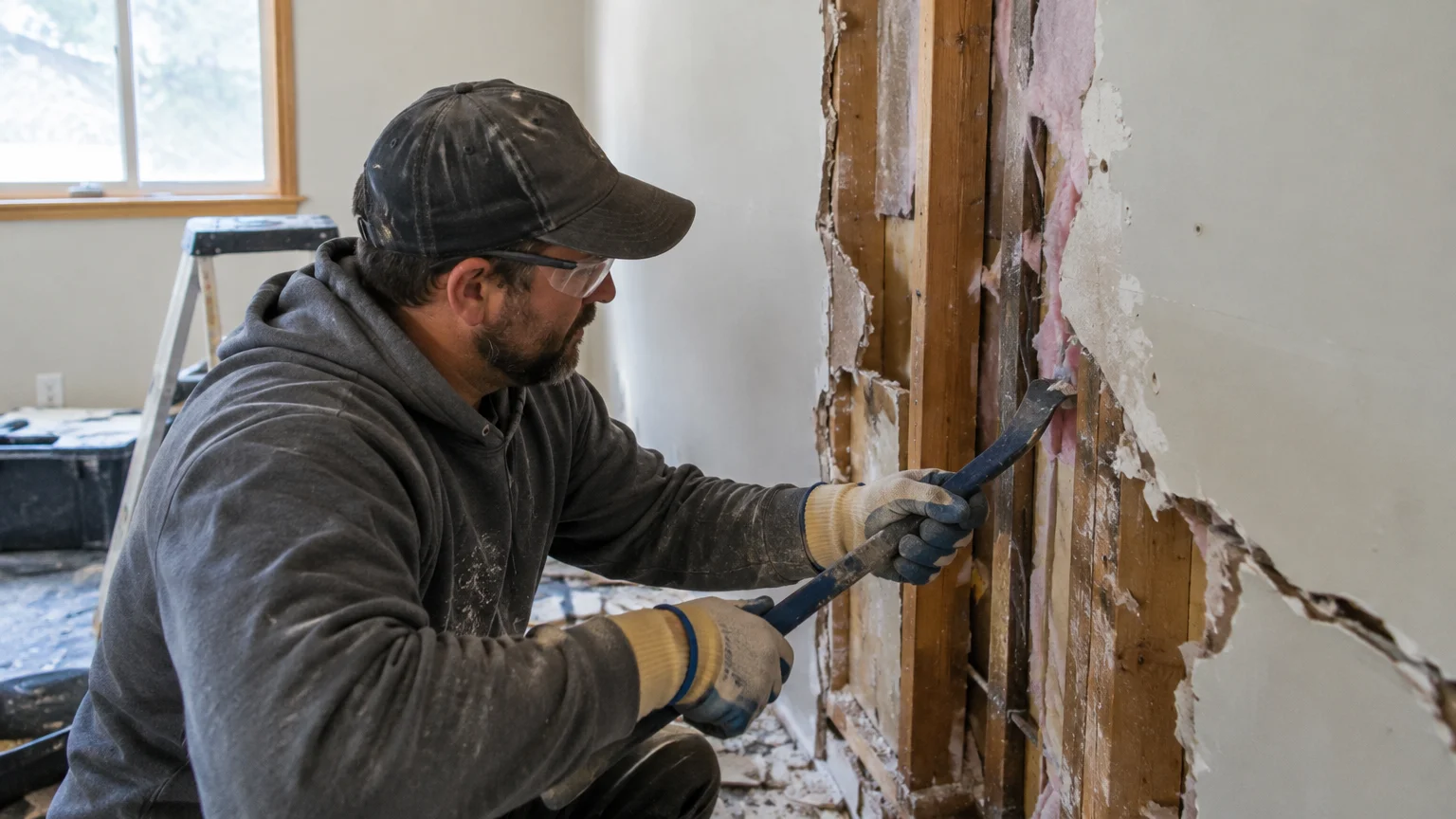
The cleanest method is to remove drywall in small sections. Start at an exposed edge and work from top to bottom. Put each piece into a lined container as soon as it falls.
Work in manageable sections from top to bottom
Score the paper along seams and corners. Remove fasteners before pulling panels when practical. Smaller pieces are easier to carry and less likely to hit floors, fixtures, or workers.
When the job allows, have one person remove material and another carry debris. Never stand below a ceiling panel that may fall. Use safe access equipment instead of chairs or makeshift platforms.
Stop if the wall behaves in an unusual way. Hidden fasteners, heavy plaster, damaged framing, or movement above the work area may signal a larger issue. A contractor should check structural concerns before work continues.
Separate damaged materials and keep debris contained
Place drywall pieces into strong bags, bins, or a marked pile on protective covering. Do not fill bags until they are hard to lift. Heavy pieces can split bags and hurt workers.
Keep clean drywall apart from wood, metal, cardboard, insulation, and general trash when local rules or a hauler require it. Keep wet or moldy materials away from clean debris.
Clean as work moves forward. Pick up screws and sharp pieces before they spread. A tidy work area is safer and makes final construction debris removal much easier.
How do you handle drywall debris after the removal is complete?
Review the debris before choosing a disposal plan. The amount, weight, material mix, access, and local rules all affect how it should leave the property.
Estimate the debris volume and choose a disposal method
Count bags, piles, or wall sections. Include ceiling material, plaster, insulation, wood, fasteners, and other tear-out waste. Debris can take more room than expected after it breaks into uneven pieces.
An owner may use an approved disposal site, a construction waste container, or a hauling service. The best choice depends on the job size and materials. Some sites have separate rules for drywall, plaster, paint, or mixed waste.
A cleanout service removes unwanted materials and carries them away for proper handling. This can help after a remodel, rental turnover, office change, foreclosure, or damaged-wall repair. It may also support other cleanouts when a property needs to be cleared.
Prepare large, heavy, or mixed renovation waste for hauling
Keep debris away from gates, narrow paths, and parked cars. Leave a clear route from the work area to the pickup point. Tell the hauler about stairs, long carries, tight access, or items that are unsafe to move.
Separate bulky items such as doors, cabinets, wood framing, appliances, and fixtures when possible. Old appliances may need special handling because they can contain refrigerants, oils, or electrical parts. A qualified provider can explain the proper process.
The same planning helps with other renovation waste, such as a hot tub, concrete, or tree branches. Disposal rules can differ by material. Do not assume every item belongs in one container.
When should you hire a professional drywall removal service?
A professional drywall removal service can help when the job is large, dusty, heavy, hard to reach, or linked to hazards. Homeowners can often handle light preparation and simple cleanup. Unsafe materials and hidden utilities need trained help.
Recognize projects that require specialized handling
Consider professional help for suspected asbestos, lead, mold, sewage damage, major water damage, high ceilings, structural walls, or large business spaces. These conditions can create health, safety, and disposal concerns.
Professional help may also make sense when workers lack time, tools, safe lifting ability, or a way to move debris. Contractors often use junk removal companies to keep job sites clear while crews focus on the remodel.
A full-service junk removal company may sort, lift, load, and haul construction debris. Tell the provider what materials are present, how workers can reach them, and whether the tear-out is still active.
Prepare the site for an efficient construction debris collection
Finish active tear-out before collection when it is safe. Bag loose drywall, stack larger pieces neatly, and keep hazardous materials apart. Do not mix unknown items with normal renovation waste.
Clear the route from the debris to the loading area. Protect surfaces that should not be damaged. Keep pets, children, customers, and unrelated workers away from the loading zone.
Junk Removal Springhill serves property owners and contractors who need organized drywall and renovation debris removal in the main Springhill area. Service can also support nearby communities, including Timber Pines, Seven Hills, Brooksville, Weeki Wachee, Hudson, and Shady Hills.
Frequently Asked Questions
Can a homeowner remove drywall without hiring a professional?
A homeowner may remove small areas of ordinary drywall when no hazards or hidden utilities are present. The work still needs dust control, safety gear, and careful debris handling. A professional should assess older materials, mold, structural walls, high ceilings, and areas near wires or pipes.
How can someone reduce dust during drywall removal?
Seal doorways, cover vents, protect floors, and remove small sections. Keep the heating or cooling system off when suitable. Clean as work continues. A fine-dust vacuum can collect particles that sweeping would spread.
What happens to old drywall after removal?
Old drywall may go to an approved construction waste site, a recycling program, or another permitted location. Rules vary by place and material condition. Wet, moldy, painted, or mixed debris may need separate handling.
Can drywall be mixed with other remodeling debris?
Drywall can sometimes be hauled with other construction debris, but separation is often better. Wood, metal, cardboard, insulation, concrete, and household trash may follow different rules. Separate loads also help identify unsafe items.
When should someone schedule debris hauling?
Hauling can be arranged after the work area is safe and loose debris is contained. Earlier pickup may help when debris blocks a walkway or creates a safety risk. Share the material type, rough volume, access details, and any suspected hazards.
Key Takeaways
- Plan the work area first and confirm which surfaces and materials will come out.
- Protect clean rooms by sealing doors, vents, floors, fixtures, and nearby finishes.
- Check for hazards such as wiring, plumbing, mold, asbestos, lead, and water damage.
- Remove drywall in small sections and contain debris as soon as it comes down.
- Use professional help for large, heavy, difficult, or hazardous tear-out projects.
Conclusion
Good preparation makes drywall removal safer and easier to clean. A clear work zone, sealed openings, careful checks, and small tear-out sections can prevent common problems. Sorting materials also helps construction debris hauling go more smoothly.
For projects, Junk Removal Springhill can help plan the next step after drywall, plaster, and renovation materials are ready for removal. The team can also help owners and contractors think through debris from other cleanouts.
If you are unsure what the wall contains, have it checked before work grows into a larger problem. Contact us today to arrange construction debris collection when your site is ready.