Appliance pickup vs dumpster rental depends on the size and type of your job. Pickup is often best for one or several large appliances because a crew lifts and hauls them away. A dumpster may work better for renovation debris or a long cleanout where waste builds up over several days.
Table of Contents
- Is appliance pickup or dumpster rental better for heavy items?
- What is included with appliance pickup?
- When is a dumpster rental the better choice?
- How do appliance pickup and dumpster rental compare for heavy lifting?
- Which option is safer for removing large appliances?
- How are appliances disposed of or recycled?
- What affects the cost of appliance pickup versus dumpster rental?
- How do you choose between appliance pickup and a dumpster?
- What should homeowners know before scheduling appliance removal?
- Key takeaways for choosing the right heavy-item removal option
- Frequently Asked Questions
Is appliance pickup or dumpster rental better for heavy items?
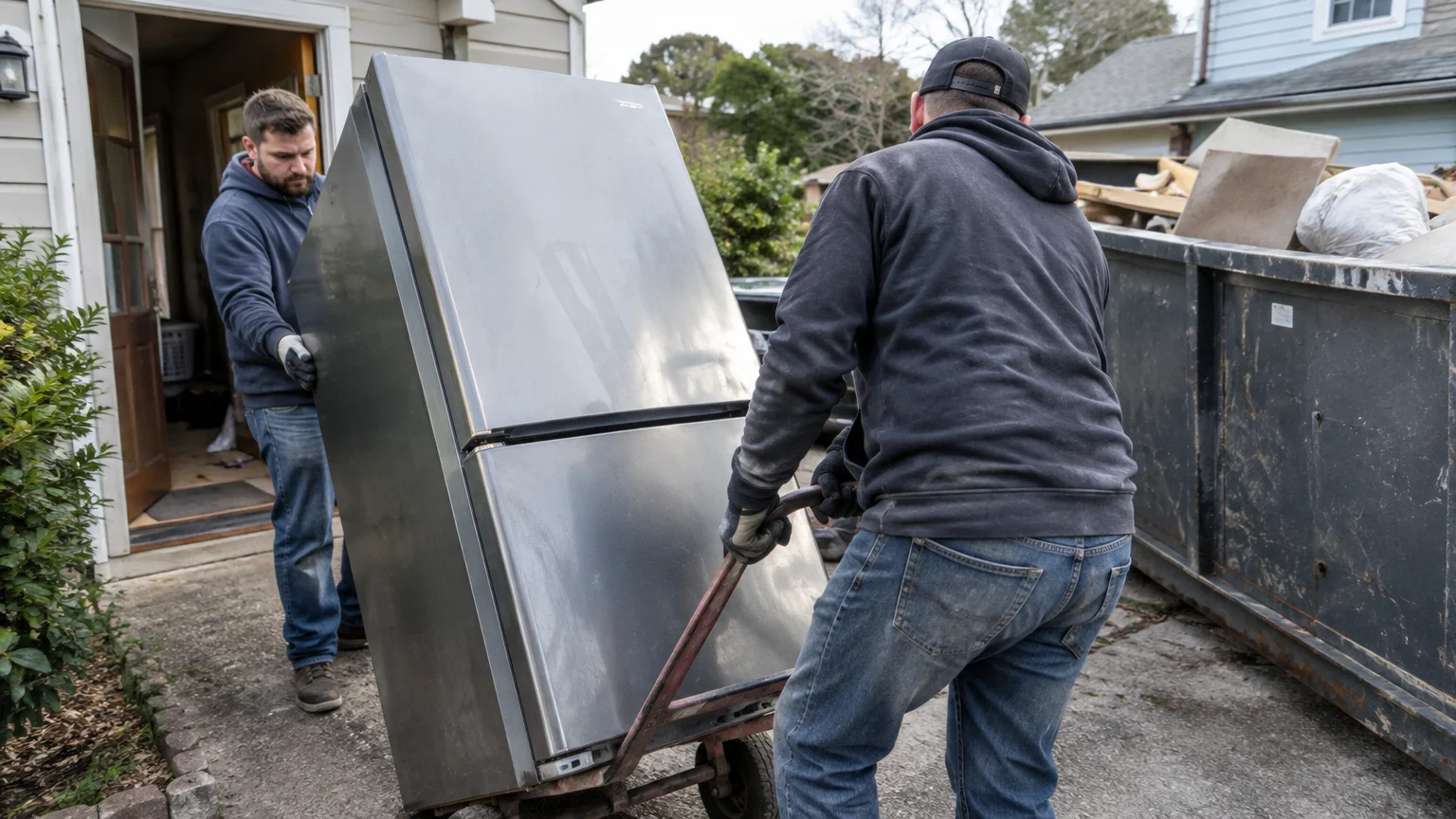
Appliance pickup is usually better for one large, heavy appliance. A removal crew can move it, load it, and haul it away. This helps when the item is inside a home, basement, garage, or narrow side yard.
A dumpster may be better when a property owner has many types of waste. It gives the owner a place to put approved debris during a project. However, the owner or project crew must usually carry each item to the container.
How the two removal options work
Appliance pickup is a scheduled service. The homeowner lists the items, clears a path, and shares details about stairs, doors, and access. The company then sends a crew with a suitable truck and equipment.
The crew may move the appliance from its current place. It may also protect nearby floors and walls while loading. After pickup, the items may go for reuse, recycling, transfer, or disposal based on their condition.
A dumpster rental means a container is placed at the property for an agreed period. The homeowner fills it with accepted material and keeps out banned items. When the project ends, the container is collected.
Which type of project each option suits best
Appliance pickup often works for a refrigerator, freezer, washer, dryer, stove, dishwasher, or air-conditioning unit. It may also suit a small household cleanout with furniture and other large items.
A dumpster may fit a kitchen remodel, floor replacement, roofing job, estate cleanout, or major garage clearing. The right choice depends on who will lift the items, how much waste exists, and how soon the property must be clear.
Junk Removal Springhill can help Springhill property owners compare both choices before planning a collection. A short list of items and their locations can make that discussion easier.
What is included with appliance pickup?
Appliance pickup usually includes collection, lifting, loading, and hauling of accepted appliances. The exact service can vary by company and item. Homeowners should explain the full job before setting a date.
Pickup may cover one appliance or several items from the same property. Some companies also take furniture, boxes, and other nonhazardous junk during the visit. The crew can explain which items fit the load and which need another disposal method.
Common appliances that can be collected
Common items include refrigerators, freezers, washers, dryers, ovens, ranges, dishwashers, microwaves, and water heaters. Small appliances may also be accepted when they are part of a larger household removal job.
Some appliances contain refrigerant, oil, batteries, or electronic parts. These materials may need special handling. Homeowners should not assume that every appliance belongs in a dumpster or trash bin.
Clean, working appliances may be sent for reuse. Broken units can contain steel, copper, aluminum, wiring, glass, and other useful materials. Sorting starts with a clear description of the item and its condition.
What homeowners should prepare before pickup
Homeowners should empty refrigerators, freezers, washers, and dryers before pickup. Remove food, water, clothing, and loose parts. Secure doors and shelves when needed.
The path to the vehicle should be clear. Rugs, boxes, toys, and small furniture can cause trips. Pets and children should stay away while heavy items are moved.
Share these details before the crew arrives:
- The appliance type, size, and general condition
- The room or outdoor area where it sits
- Stairs, narrow halls, gates, or steep driveways
- Whether it connects to water, gas, or power
- Damage that could make the item harder to move
Workers should not disconnect gas lines, electrical systems, or unsafe connections unless that work is part of their service. A qualified person should make the connection safe before pickup when needed.
When is a dumpster rental the better choice?
A dumpster may be best for a large amount of debris made over several days. It gives the project one place for approved waste. This can reduce repeat trips when a homeowner, contractor, or cleanup team is already doing the labor.
A dumpster is less useful for one refrigerator or washer when lifting is the main need. The homeowner still has to move the item from the house to the container. That move can harm floors, walls, doors, or the appliance.
Renovation debris and large-volume cleanouts
Dumpsters often suit flooring, cabinets, drywall, wood, tile, roofing material, and other renovation debris. They may also fit a full garage cleanout or property cleanout with many smaller items.
Materials must be placed safely inside the container. Heavy debris should not be stacked so the load becomes unstable. Sharp pieces need care, and banned materials must stay out.
Review the accepted-material rules before delivery. Paint, chemicals, propane tanks, tires, some electronics, and refrigerant appliances may need separate handling. Local rules can also affect what a hauler accepts.
How long-term projects affect the decision
A longer project may favor a dumpster because workers can add debris as they go. This helps during a remodel that will not finish in one day. The container must remain easy to reach during its rental period.
A short project with a few large items may favor scheduled appliance pickup. There is little reason to keep a container on the property when the main need is removing finished appliances.
Available space matters too. Driveways, alleys, and streets may have placement limits. Homeowners should check property rules and ask about placement before choosing a container.
How do appliance pickup and dumpster rental compare for heavy lifting?
Appliance pickup usually gives more help with heavy lifting. The crew moves the item from its location and loads it onto a truck. Dumpster rental usually leaves the moving and loading to the homeowner or project team.
This matters because appliances are awkward as well as heavy. Their weight can shift while moving. Smooth sides can also make them hard to grip.
Who handles moving, loading, and hauling
With appliance pickup, trained workers bring tools and work together. They may use dollies, straps, ramps, blankets, and other equipment. The crew also controls how the appliance enters the truck.
With a dumpster, the property owner places debris inside. A contractor may do this during a remodel, depending on the project agreement. The dumpster company usually does not remove an appliance from inside the home just because the container is nearby.
Homeowners should not ask friends or family to move a large appliance without a plan. A poor lift can cause injury. A rushed move can also damage a doorway or finished floor.
Access challenges around the home
Access can change the best option. Tight halls, basement stairs, raised thresholds, gates, and uneven ground may make self-loading hard. Tell the crew about these conditions before arrival.
Measure narrow openings when possible. An appliance may need its doors removed to fit through a tight space. A qualified person should plan that work rather than attempt it during a rushed move.
Junk Removal Springhill can ask Springhill homeowners about access before arranging appliance removal. Clear details help the company bring the right equipment and crew.
Which option is safer for removing large appliances?
Professional appliance pickup is often safer when a large appliance must leave the home. The crew can plan the route, use moving tools, and control the load. A dumpster can still be safe for smaller debris when loaders follow safe work steps.
Safety depends on the item, its place, its condition, and the people doing the work. Rust, broken glass, leaking fluids, and loose parts can add risks.
Risks of moving refrigerators, washers, and dryers
Refrigerators and freezers can be hard to control on stairs. Washers may hold water that spills during movement. Dryers may have sharp edges, damaged cords, or loose panels.
Some appliances connect to gas, water, or high-voltage power. A homeowner should not disconnect an unsafe connection without proper knowledge. The power source should be made safe before the item moves.
Keep hands away from pinch points and keep the appliance upright when required. Never place anyone beneath a lifted appliance. Do not use makeshift supports.
Protecting floors, walls, doors, and driveways
Moving blankets and proper tools can help protect finished surfaces. Clear the route before moving begins. Open doors fully and move fragile decorations away.
Driveways can also suffer damage when heavy items are dragged. Use a dolly when suitable, and do not push the load across delicate surfaces. Watch for steps, cracks, wet ground, and loose gravel.
Homeowners can help by clearing clutter and keeping people away from the route. They do not need to lift the appliance when a professional pickup service handles the job.
How are appliances disposed of or recycled?
Appliances may be reused, recycled, taken apart for parts, or disposed of when they cannot be recovered. The right path depends on the item, its condition, and the materials inside it.
Recycling means separating useful materials so they can be processed into new products. It is different from putting an appliance in a landfill. A responsible hauler sorts items when practical and follows handling rules.
Refrigerant, metal, and electronic components
Refrigerators, freezers, and some air-conditioning units may contain refrigerant. Refrigerant is a chemical that moves heat inside cooling equipment. Ask the service provider how it will be recovered and handled.
Appliances also contain steel, copper, and aluminum. Motors, wiring, circuit boards, insulation, glass, and plastic may need separate processing. This is one reason appliances should not be treated like regular household trash.
Electronic controls and batteries may need a special recycling stream. Tell the service provider about unusual items, damaged batteries, or leaks before pickup.
Why responsible disposal matters
Proper disposal helps prevent unsafe handling and keeps useful materials in use. It also helps stop appliances from being left beside roads, in empty lots, or where children and animals can reach them.
Ask where collected appliances go and whether the company handles special materials. The answer may depend on local facilities and current rules.
For residents seeking local junk removal, the main Springhill area, including Timber Pines, Seven Hills, Brooksville, Weeki Wachee, Hudson, Shady Hills, and nearby communities, may have different facilities and rules. Junk Removal Springhill can explain the planned handling process before the appointment.
What affects the cost of appliance pickup versus dumpster rental?
The final cost depends on the job, not only the appliance or container. Key factors include the amount of material, number of items, labor, access, travel, disposal needs, and timing. The final cost is confirmed on a quote after the company reviews the details.
Appliance pickup and dumpster rental also cover different kinds of work. Pickup centers on labor and hauling. A dumpster centers on delivery, container space, the rental period, collection, and the material placed inside.
Volume, weight, labor, and access considerations
One appliance is usually a smaller job than a full home cleanout. Several appliances, heavy furniture, and dense debris can need more labor and truck space. Difficult access can also change the work plan.
Basement stairs, long carries, narrow doors, and steep driveways may need extra workers or special tools. Hazardous materials and refrigerant appliances may need a separate process. Share these details when requesting a quote.
A dumpster may be less useful when it must stay for a long time while little material is added. It may also be a poor fit when the main problem is lifting items from inside the home.
When the final quote is confirmed
The final quote should be confirmed after the company understands the items, access, labor needs, and disposal rules. Ask what the quote includes and whether special materials need separate approval.
Do not rely on a guess based only on an appliance photo or service label. Clear information helps prevent confusion and supports a safer work plan.
How do you choose between appliance pickup and a dumpster?
The best choice comes down to four questions. What needs removal? Who will do the lifting? How fast must the property be clear? Do the items include special materials? Appliance pickup usually fits bulky items, while a dumpster usually fits ongoing debris work.
Think about space, access, and the amount of hands-on help available. A low container does not remove the need to carry heavy items from the home.
A practical decision checklist
Use this checklist when comparing the two options:
- Choose appliance pickup for one or several large appliances.
- Choose pickup when workers must carry items from inside the home.
- Choose a dumpster when renovation debris will build up over several days.
- Choose a dumpster when a project team can load it safely.
- Ask about refrigerant, batteries, chemicals, and electronics.
- Confirm placement space, access limits, and accepted materials.
Choose the method that matches the work, not just the container size. The safest option may be the one that removes the most lifting from the homeowner.
Combining removal methods for larger projects
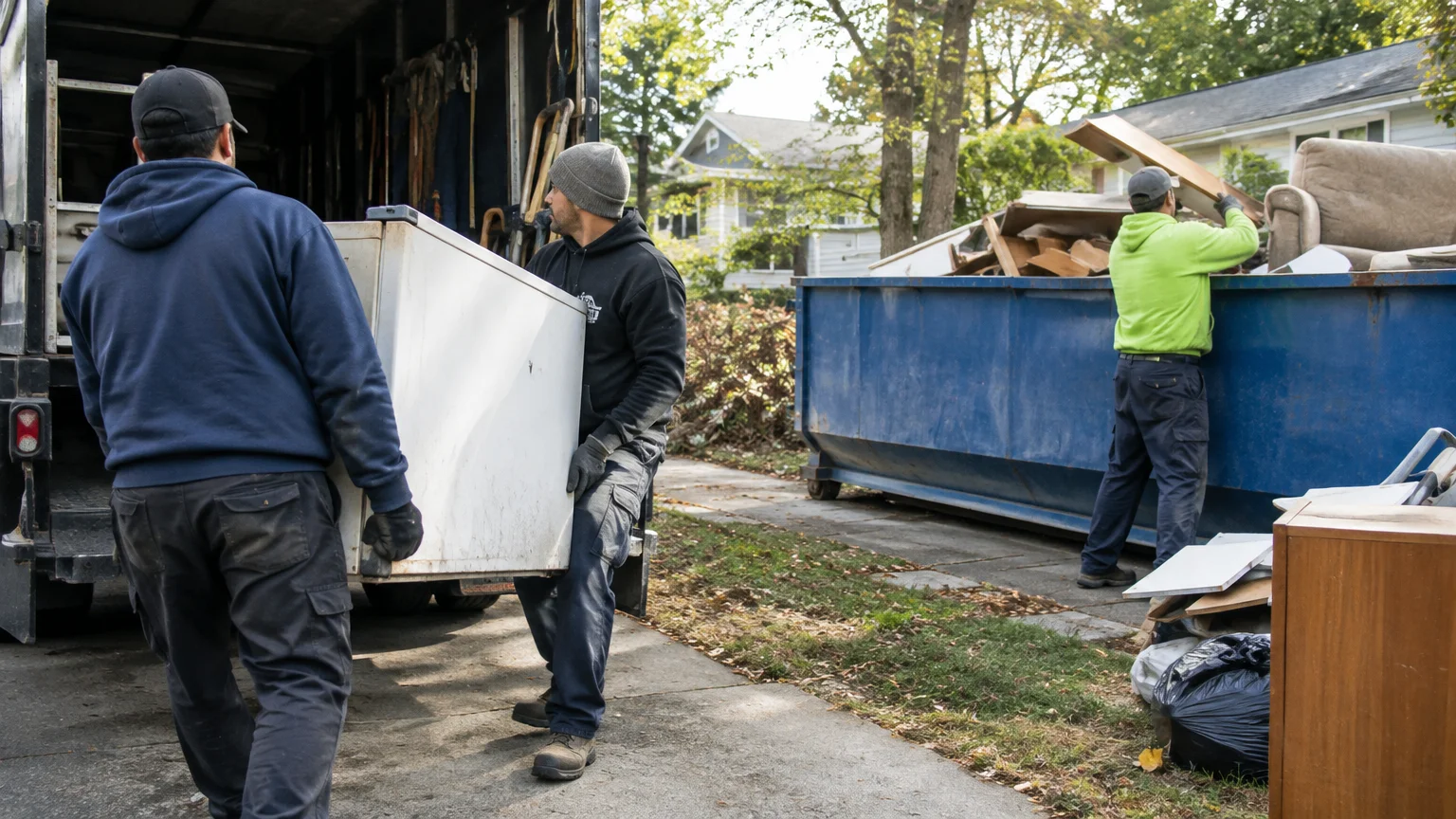
Some projects use both options. A dumpster can hold clean renovation debris while appliance pickup handles refrigerators, washers, dryers, and other bulky units. This keeps special items separate from general construction waste.
A combined plan works best when each provider knows what the other service will handle. Do not place restricted appliances or materials in a dumpster without approval.
What should homeowners know before scheduling appliance removal?
Before scheduling, list every item and explain where it sits. Mention stairs, narrow paths, gates, steep slopes, and damage. Also say whether an appliance connects to power, gas, or water.
A clear list helps the company decide whether the job fits a standard pickup. It also helps the homeowner prepare the property and avoid delays.
Preparing appliances for collection
The appliance should be empty, dry when possible, and easy to reach. Clear all food from refrigerators and freezers. A washer should hold no water or clothing, and a dryer should be empty.
Remove loose shelves, racks, trays, and personal items. Do not cut lines or disconnect unsafe systems unless you know how to do so safely. A qualified worker should handle gas and electrical concerns.
Clear the path from the appliance to the loading area. Children and pets should stay away while the crew works. If the appliance is outside, remove branches, tools, and standing water.
Questions about prohibited or special items
Ask which appliances and materials the company accepts. Questions are especially important for items with refrigerant, fuel, chemicals, batteries, medical waste, or sharp damage.
The company may decline an item or suggest another facility. This does not mean the item cannot be handled. It means the item needs a disposal route that matches its material and risk.
You can also ask how usable items are sorted and whether recyclable metals are separated. These questions help you choose a service that fits both the cleanup and disposal needs.
Key takeaways for choosing the right heavy-item removal option
- Appliance pickup usually fits one or several large household appliances.
- A dumpster usually fits renovation debris and large, ongoing cleanouts.
- Pickup gives more help with lifting, loading, and hauling from the home.
- Report stairs, tight spaces, connections, damage, and special materials.
- The final quote depends on job details and is confirmed before work begins.
The best choice for a single appliance or small cleanout
Appliance pickup is often the simpler choice for a refrigerator, freezer, washer, dryer, stove, or similar item. It reduces the need to move heavy equipment across the property. It also helps keep special appliances separate from normal household debris.
A small cleanout may fit pickup too, especially when it includes furniture or several bulky items. Describe the full load so the company can plan the visit.
The best choice for ongoing renovation debris
A dumpster often fits a remodel, demolition project, or long garage cleanout. It gives the project a place for approved debris as work continues. The property owner must still load it safely and follow accepted-material rules.
The best result comes from matching the service to the work. Junk Removal Springhill helps property owners review the items, access, and disposal needs before they choose. Contact us to arrange appliance pickup and discuss the right removal plan.
Frequently Asked Questions
Is appliance pickup better than a dumpster for one refrigerator?
Usually, yes. Appliance pickup is made for bulky items that need lifting and hauling. A dumpster may require the homeowner to move the refrigerator from inside the home and load it alone. Ask about refrigerant handling before scheduling removal.
Can a washing machine go in a dumpster?
It depends on the dumpster company and local disposal rules. Some providers do not accept appliances, while others may allow certain units with approval. Never place a washer in a container without confirming that it is accepted and prepared correctly.
Who takes old freezers?
A junk removal company, appliance recycler, transfer facility, or local waste program may accept an old freezer. Freezers can contain refrigerant and should not be treated like regular trash. Describe the unit and ask how it will be handled before collection.
Can homeowners move large appliances themselves?
They can handle simple preparation, such as emptying the appliance and clearing the path. Moving the appliance is different. Large units can cause injury or property damage, especially on stairs and tight turns. Professional pickup is safer when special tools or several people are needed.
What should homeowners do with appliances that still work?
Working appliances may suit reuse, donation, resale, or a reuse program. Check the item’s condition, age, safety, and local acceptance rules. A removal company may help direct usable items toward reuse instead of general waste.
If you are not sure what you are dealing with, it is worth having someone look at it before it turns into a bigger job. Get in touch with Junk Removal Springhill today and we will tell you where you stand.