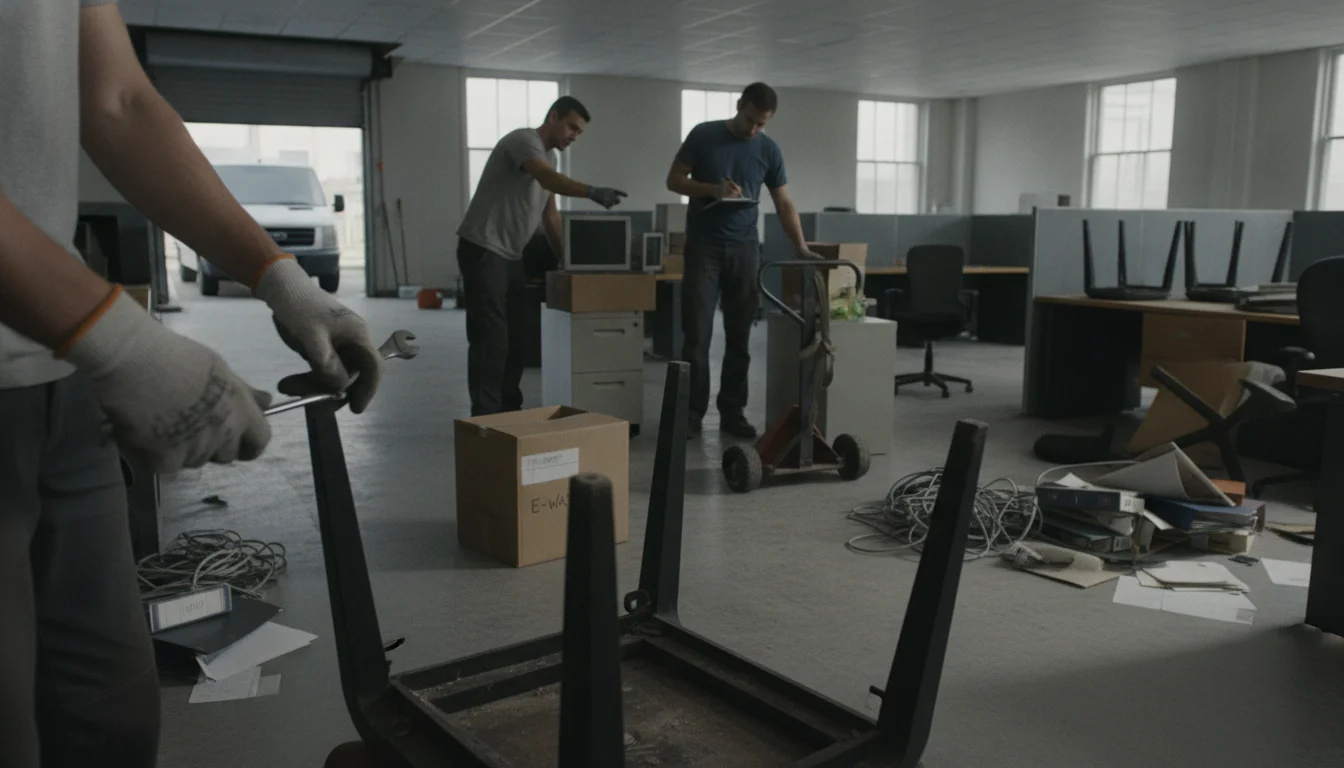
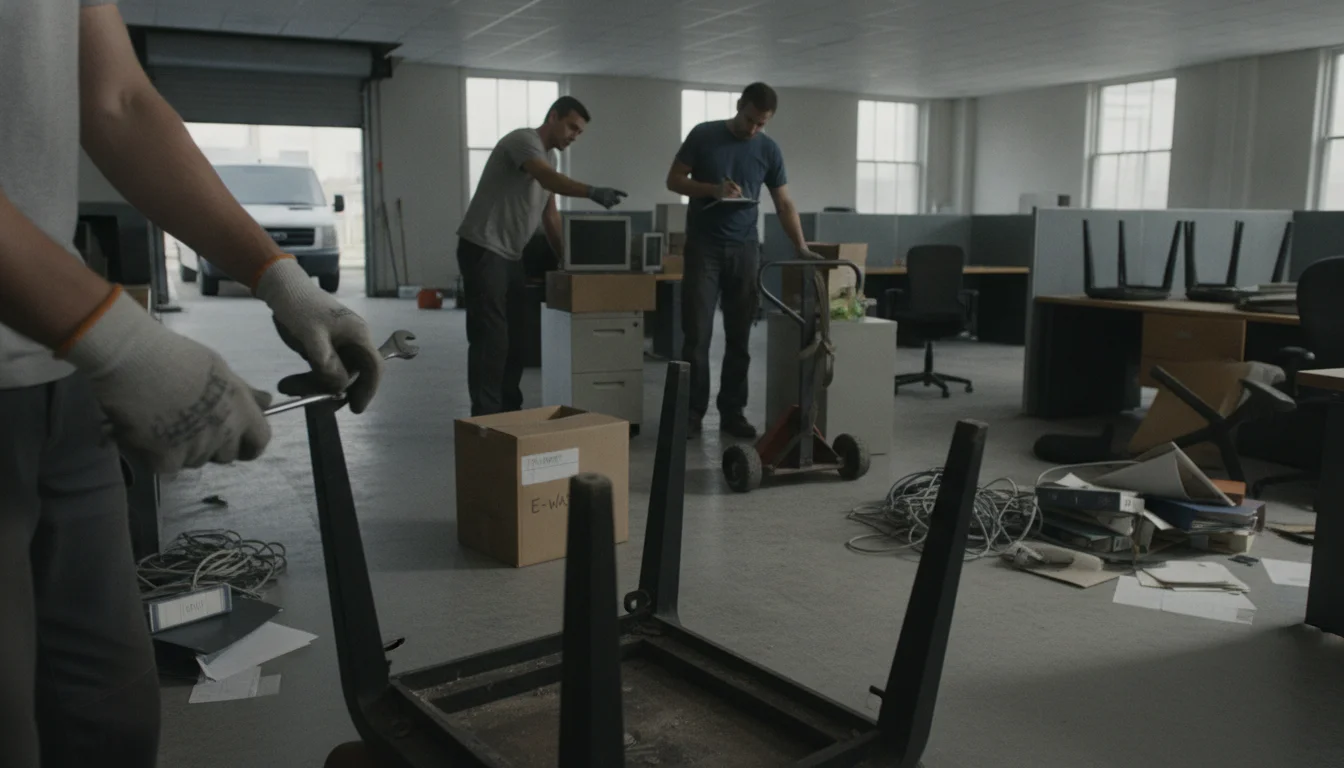
Office furniture removal vs dumpster rental comes down to labor, space, timing, and waste type. Professional removal handles lifting, loading, hauling, and cleanup. A dumpster may work for renovation debris when workers can load it safely. The right choice helps Spring Hill businesses avoid delays, injuries, and added planning.
A workplace cleanout may seem easy at first. The work becomes harder when someone must move heavy desks through halls, elevators, and doors. Owners must also protect floors, keep exits clear, and help staff stay safe.
Junk Removal Springhill helps businesses and property owners plan furniture pickup in Spring Hill and nearby areas. The best option depends on the furniture, building, schedule, and type of waste.
Table of Contents
- What Is the Difference Between Office Furniture Removal and Dumpster Rental?
- When Is Office Furniture Removal the Better Choice?
- When Does a Dumpster Make More Sense for Office Furniture?
- How Much Does Office Furniture Removal Cost Compared With a Dumpster?
- What Happens to Office Furniture After It Is Removed?
- What Should Businesses Consider Before Choosing an Option?
- Which Office Cleanout Option Is Right for Your Business?
- Frequently Asked Questions
What Is the Difference Between Office Furniture Removal and Dumpster Rental?
Office furniture removal includes the labor to carry, load, haul, and manage unwanted items. A dumpster rental gives you a container, while your staff or contractors usually move and load the waste. This basic difference affects time, safety, space, and work duties.
How professional furniture removal works
A removal team reviews the items and checks the pickup area. The crew then plans a safe path through the building. They move the furniture, load the truck, and clear loose debris from the work area.
This service can help with heavy desks, cubicle panels, filing cabinets, and conference tables. Professional furniture removal also lets employees stay focused on their normal work. Items may be sorted for reuse, recycling, or proper disposal when possible.
The team may need details about stairs, elevators, doors, parking, and building hours. These details help the crew plan the job before arrival. They can also help prevent delays during a move or office upgrade.
How dumpster rental works for business cleanouts
A dumpster is placed in a suitable area, such as a parking lot or loading zone. Business staff, movers, or contractors break down and carry items into the container. The provider later removes the filled container under the rental plan.
This choice needs careful planning. The business may need permission to use shared property. It may also need to protect pavement and keep the container away from doors, sidewalks, and fire lanes.
Large furniture may need to be taken apart before it fits inside. Workers must also lift and carry each piece. If the team has little time or no safe loading plan, a dumpster alone may not be enough.
When Is Office Furniture Removal the Better Choice?
Office furniture removal is often the better choice when a business needs lifting, loading, and haul-away help. It fits jobs with tight deadlines, limited staff, hard access, or many large items. It may also lower the chance of injuries and damage to the building.
Advantages for desks, cubicles, and conference tables
Desks and conference tables can be heavy and hard to turn through narrow spaces. Cubicles may include panels, frames, shelves, and wiring parts. A trained crew can separate and move these pieces in a safe order.
Removal service also helps when furniture must leave a leased office quickly. The team can follow a planned route and load items in an organized way. This may help during a relocation, downsizing project, renovation, or property turnover.
Businesses should also think about the work left after loading. A truck crew can gather loose pieces and leave the area ready for the next step. This may be useful when another tenant, contractor, or employee needs the space soon.
Situations where speed and labor matter most
Businesses often choose removal help when employees cannot spend hours hauling. The same is true when a building has stairs, long halls, small elevators, or limited loading access. A business may also need help after an eviction, closure, or sudden office change.
Junk Removal Springhill works with property owners and business teams when large items must leave on a clear schedule. Office Cleanout and Commercial Junk Removal can help with larger jobs that include furniture and other unwanted materials.
This type of help may also suit a business with only a short window between tenants. A clear pickup plan can help reduce downtime. It can also keep workers from moving heavy items without the right tools or training.
When Does a Dumpster Make More Sense for Office Furniture?
A dumpster may make more sense when a business has a large amount of mixed waste and enough workers to load it. It can suit a renovation, demolition, or major build-out where furniture is only part of the debris. The site must also have a safe place for the container.
Projects that produce mixed renovation debris
A dumpster may hold some project waste, such as broken flooring, drywall, packaging, and damaged fixtures. The provider must accept each material. This option can work well when contractors already manage the site and have workers ready to load it.
Businesses should confirm accepted materials before ordering. Some containers do not accept electronics, chemicals, appliances, tires, or other restricted items. Heavy materials may also have weight limits or special loading rules.
Furniture should not be mixed with unknown liquids or dangerous items. Staff should ask questions before delivery if the project includes unusual waste. This simple step can help prevent a rejected load or a delayed pickup.
Space, access, and loading requirements
The container needs a level area with enough room for delivery and removal. It should not block exits, sidewalks, fire lanes, customer paths, or nearby parking. A business may need approval from a landlord, property manager, or local authority.
Loading also takes time. Workers may need to dismantle desks, carry parts outside, and spread weight across the container. They must keep the area clear while the work continues.
If the site has no safe loading team, professional furniture pickup may be a better fit. This is especially true for offices with stairs, tight doors, or large conference furniture. A dumpster provides a container, but it does not provide the labor to fill it.
How Much Does Office Furniture Removal Cost Compared With a Dumpster?
Costs vary for both choices. Businesses should compare the full work involved instead of looking only at the rental or service price. Furniture removal may reflect labor, item size, access, travel, and disposal needs.
Dumpster use may include delivery, rental time, disposal, weight, and extra charges set by the provider. The business also supplies workers, tools, and time to load the container. These tasks should be part of the comparison.
What affects the cost of furniture removal
A removal service may consider how many items need pickup and how hard they are to move. Stairs, elevators, long carrying distances, narrow doors, and limited parking can affect the plan. Special handling for electronics or other restricted items may also change the work involved.
The final amount depends on the project and is confirmed when the business gets in touch. Businesses should describe the furniture, building, access points, timing, and mixed waste before scheduling.
A clear inventory can make this discussion easier. List desks, chairs, cabinets, tables, cubicles, appliances, and loose junk. Photos may also help explain the size and condition of the items.
Dumpster rental fees and additional expenses
Dumpster costs can depend on container size, rental time, local disposal rules, and material type. Extra charges may apply if the container is overloaded, kept longer than planned, or filled with restricted materials. The business also supplies the labor and tools needed to load it.
A fair comparison includes employee time, possible equipment rental, site preparation, and cleanup. For some projects, a dumpster may work well. For others, direct pickup may reduce planning and physical work.
Businesses should also consider lost work time. Employees who load furniture are away from their regular duties. A shorter job may be worth considering when an office must reopen or change tenants quickly.
What Happens to Office Furniture After It Is Removed?
After removal, furniture may be sorted for reuse, donation, recycling, or disposal. The best path depends on the item’s condition, material, local rules, and demand. Businesses should not assume every item can be donated or recycled.
Donation, reuse, recycling, and disposal options
Usable desks, chairs, shelves, and tables may be offered to donation groups, resale outlets, schools, or community programs. Clean metal parts may enter a recycling stream. Some wood and plastic pieces may need separate handling.
Broken or unsafe furniture may require disposal. Sorting items before pickup can help, but many businesses do not have time for detailed preparation. A removal team can explain what information is needed before the appointment.
Businesses should mark items that must stay. They should also remove personal files, labels, and private records before workers move the furniture. This helps prevent the wrong items from leaving the building.
Handling electronics, mattresses, and regulated materials
Office cleanouts may include monitors, printers, batteries, appliances, or other electronics. These items often need a different recycling or disposal path than ordinary furniture. A business should identify them early and ask whether the chosen provider accepts them.
Mattresses, chemicals, paint, fuel, medical waste, and some building materials may also have special rules. Never place unknown liquids or dangerous items in a dumpster. When unsure, check local guidance or ask the service provider before pickup.
Keeping these items separate can make the work safer. It also helps the business avoid mixing materials that need different handling. Share a list of unusual items before the crew arrives.
What Should Businesses Consider Before Choosing an Option?
Businesses should compare volume, timing, labor, access, building rules, and material types. No single option works for every office. A short site review can prevent delays and help the business choose a safe plan.
Evaluating volume, timing, labor, and access
Start by listing the main items. Include desks, cubicle panels, chairs, tables, shelves, cabinets, appliances, and loose junk. Then note how many workers can help and when the space must be clear.
Access matters as much as volume. A third-floor office with a small elevator may need more planning than a ground-level suite with a loading dock. Photos, measurements, parking details, and building hours can help the provider prepare.
The business should also decide whether furniture needs to be taken apart. Some pieces can move as one unit. Others may need tools, careful wrapping, or a planned order of removal.
Planning around employees, tenants, and building rules
Office removal should not block customer paths, shared halls, loading areas, or emergency exits. Property managers may require proof of insurance, set service hours, floor protection, or advance notice. Tenants may need permission before placing a dumpster on shared property.
Tell staff when the work will happen and keep people away from active loading areas. Mark the route when needed. Clear planning helps protect workers, visitors, walls, floors, doors, and furniture.
Spring Hill businesses should also check parking and access rules before the work begins. A truck or dumpster may need room to enter, turn, load, or leave. Sharing these details early can help avoid a missed appointment.
Which Office Cleanout Option Is Right for Your Business?
The right choice depends on who will do the physical work and what the project will produce. Professional removal fits bulky furniture and quick turnarounds. A dumpster fits some large projects when the site has space, labor, and mostly accepted debris.
A practical decision checklist
Businesses can review these points before choosing:
- Choose furniture removal when desks, tables, cabinets, or cubicles need lifting and loading.
- Choose a dumpster when contractors already have labor for mixed renovation debris.
- Ask about electronics, appliances, mattresses, chemicals, and other restricted materials.
- Confirm building access, parking, loading zones, and required property approvals.
- Set a clear date for removal, cleanup, and the return of usable space.
Planning the next steps for a smooth removal
A smooth project starts with a simple inventory and a clear work area. Remove personal files, label items that must stay, and secure sensitive documents before the crew arrives. Confirm which furniture is included and how mixed debris will be handled.
Junk Removal Springhill can help property owners and business teams review furniture pickup needs across the main Spring Hill area, including Timber Pines, Seven Hills, Brooksville, Weeki Wachee, Hudson, Shady Hills, and nearby communities. The business name is trusted by local teams planning office cleanouts and bulky item pickup.
Frequently Asked Questions
Is office furniture removal better than a dumpster for a small office?
Often, yes. Direct furniture removal can suit a small office with a few heavy desks, chairs, or cabinets. The team handles lifting and hauling, so employees do not need to load a container.
The better choice still depends on access, timing, item type, and waste amount. A small office with renovation debris may still need a container. A small office with bulky furniture may need hands-on removal instead.
Can a dumpster take desks and cubicle panels?
A dumpster may accept desks and cubicle parts, but rules differ by provider and material. Some items must be broken down first. Overloaded containers can also create problems.
The business should confirm accepted materials, size limits, placement rules, and loading needs before delivery. This is especially important when the project includes wiring, electronics, glass, or other unusual parts.
What should a business do with old office electronics?
Keep old electronics separate from ordinary furniture until the business confirms the correct handling method. Monitors, printers, batteries, and other devices may need special recycling. A provider can explain whether those items are accepted and how to prepare them.
Do not place unknown devices or batteries into a container without checking first. A short list of electronics can help the provider give clear instructions before pickup.
How can a business prepare for office furniture pickup?
Make a simple item list, remove personal property, protect sensitive files, and clear the route from each item to the truck. Confirm building hours, elevator access, parking, loading rules, and items that need special handling.
Staff should mark furniture that must remain. The business should also tell the crew about stairs, narrow doors, long halls, and shared spaces. Good details help the team plan a safer visit.
Does Junk Removal Springhill serve businesses?
Junk Removal Springhill serves businesses and property owners in the surrounding Spring Hill area. The team can review office furniture, bulky items, and related cleanout needs.
Businesses should share item types, access details, preferred timing, and special materials before scheduling. This helps the team understand the job and plan the right type of removal.
Key Takeaways
- Office furniture removal includes labor, loading, hauling, and cleanup support.
- A dumpster may fit renovation debris when the business has loading labor and space.
- Desks, cubicles, tables, and cabinets need careful access planning.
- Electronics and restricted materials may need separate handling.
- The best choice depends on volume, timing, access, labor, and building rules.
Conclusion
Office furniture removal vs dumpster rental is mainly a choice between hands-on service and self-loading. A dumpster can work for mixed renovation waste and large sites with available labor. Professional removal may be easier for bulky furniture, tight schedules, difficult access, and businesses that need employees focused on regular work.
A clear inventory and site plan can help prevent delays. Junk Removal Springhill supports office cleanouts and furniture pickup for businesses and nearby communities in Spring Hill. Contact us to plan the next step for your office cleanout or furniture removal project.
If you are not sure which of these you are dealing with, it is worth having someone look at it before it turns into a bigger job. Get in touch with Junk Removal Springhill today and we will tell you where you stand.